



How to Choose Carbon Fiber Fabric?
Carbon fiber fabric has become an essential material in the fields of composites, automotive, marine, sports equipment, and even aerospace. Lightweight, exceptionally stiff, and offering a premium appearance, it allows the production of parts that are both high-performing and visually appealing.
However, not all carbon fiber fabrics are the same. Fabric weight, weave pattern, fiber orientation, and resin compatibility are all key factors to consider before starting your project.
Why Is Choosing the Right Carbon Fiber Fabric Important?
The carbon fiber fabric you select directly impacts the mechanical performance and final appearance of your part.
Choosing the wrong fabric can result in:
- Insufficient stiffness
- A heavier part than necessary
- A disappointing cosmetic finish
- More difficult lamination
On the other hand, selecting the right fabric makes the manufacturing process easier and helps achieve a professional-quality result.
The Main Selection Criteria
Fabric Weight
Fabric weight refers to the weight of the fabric per square meter (g/m²).
As a general guideline:
- 160–200 g/m²: Ideal for decorative parts, small composite components, and cosmetic finishes.
- 200–300 g/m²: An excellent balance between ease of use and mechanical performance.
- Above 300 g/m²: Recommended for structural components requiring maximum strength.
Lighter fabrics conform more easily to complex shapes, while heavier fabrics provide increased stiffness.
The Different Weave Types
The weave pattern influences both the mechanical properties and the visual appearance of the finished part.
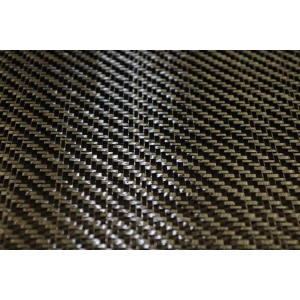
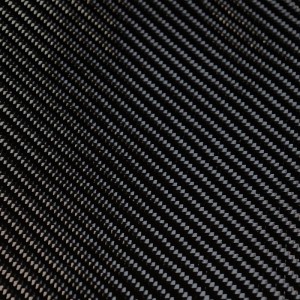
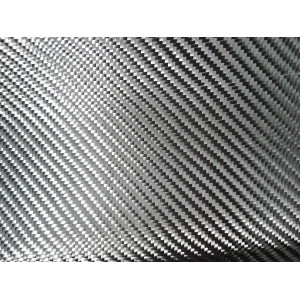
Twill Weave
The most popular option.
Its advantages include:
- Excellent drapability over complex shapes
- Attractive diagonal weave pattern
- Premium cosmetic finish
Twill weave is the preferred choice for visible components such as automotive parts, decorative objects, and high-end accessories.
Plain Weave
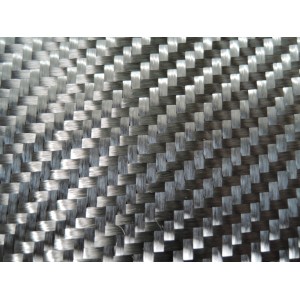
The fibers are interlaced in a regular over-and-under pattern.
This weave offers:
- Excellent dimensional stability
- High precision
- A more subtle appearance
It is commonly used when mechanical performance is prioritized over aesthetics.
Which Epoxy Resin Should You Use?
Choosing the right resin is just as important as selecting the carbon fiber fabric.
To achieve high-quality laminates, it is recommended to use an epoxy resin specifically formulated for composite applications.
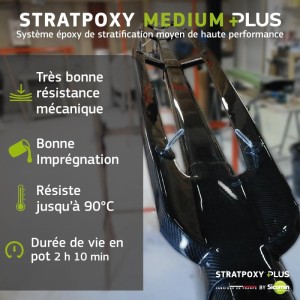
Sicomin epoxy systems offer several key benefits:
- Excellent fiber wet-out
- Strong adhesion
- Low shrinkage
- Outstanding mechanical properties
- Crystal-clear finish when the carbon weave remains visible
Depending on your application, Sicomin offers epoxy systems suitable for hand lay-up, vacuum infusion, and molding processes.
Sicomin Carbon Fiber Fabrics
The Sicomin online store offers several carbon fiber fabrics suitable for both hobbyists and professionals.
Among the most popular products are:
- HR 3K Twill Carbon Fabric 193 g/m², ideal for cosmetic parts thanks to its iconic diagonal weave.
- HR 3K Plain Carbon Fabric 193 g/m², perfect for applications requiring excellent dimensional stability.
- TR30S Twill Carbon Fabric 240 g/m² WF2, recommended for projects requiring increased strength and stiffness.
These fabrics are carefully selected for their manufacturing quality and their perfect compatibility with Sicomin epoxy systems.
Which Fabric Should You Choose for Your Project?
The right choice mainly depends on your application.
For Decorative Parts
Choose:
- A 3K twill fabric
- A fabric weight of around 200 g/m²
- A clear epoxy resin to enhance the carbon weave
For Structural Parts
Opt for:
- A heavier fabric weight
- Multiple laminate layers
- A high-performance epoxy resin
For Complex Shapes
Twill weave generally conforms more easily to curves and intricate geometries while minimizing wrinkles.
Common Mistakes to Avoid
Some common mistakes include:
- Choosing a fabric based only on its appearance
- Using a resin that is not designed for carbon fiber
- Underestimating the required number of layers
- Ignoring fiber orientation during lamination
Proper planning and material selection help produce a lighter, stronger, and longer-lasting composite part.
Conclusion
Choosing carbon fiber fabric involves much more than selecting an attractive weave. Fabric weight, weave pattern, and epoxy resin all play a crucial role in the final performance of your composite project.
With its range of premium-quality carbon fiber fabrics and epoxy systems specifically developed for composite manufacturing, Sicomin provides reliable solutions for hobbyists, craftsmen, and industry professionals alike. By selecting the right fabric and pairing it with a high-performance epoxy system, you'll achieve lightweight, durable parts with an exceptional finish.