

Bio-Based Epoxy Resin: Are the Performances Really Equivalent?
The idea that bio-based epoxy resins are less efficient than traditional petroleum-based systems is outdated. In reality, bio-based epoxies are chemically equivalent to petroleum-based epoxy resins once fully cured.
Why Are the Performances Equivalent?
1. An Identical Chemical Structure After Curing
Whether bio-based or petroleum-based, epoxy resins operate on the same principle: a chemical reaction between a resin and a hardener.
What truly matters is not the origin of the raw materials, but the final molecular structure obtained after polymerization.
Modern bio-based resins use plant-derived precursors (such as oil derivatives), but once cross-linked, they form the same molecular network as traditional petroleum-based epoxies.
Result:
Mechanical properties such as strength and rigidity are equivalent to conventional epoxy systems.
2. Mechanical Properties Proven in Real-World Conditions
Today, bio-based epoxy systems are used in demanding industries such as:
- Marine and boatbuilding
- Sports equipment (surfboards, skis, bicycles)
- Composite construction
These applications require:
- High mechanical resistance
- Excellent adhesion
- Strong fatigue resistance
Tests show that well-formulated bio-based epoxy systems achieve:
- Similar stiffness and modulus values
- Equivalent tensile and flexural strength
- Excellent fiber-to-resin cohesion
3. Controlled Thermal Resistance
Contrary to common misconceptions, bio-based epoxy resins can achieve high glass transition temperatures (Tg).
Thanks to optimized formulations:
- Tg can be adjusted depending on the hardener used
- Thermal performances can meet demanding industrial requirements
In other words, they perform perfectly in highly technical environments.
Focus on Sicomin and Its Bio-Based Epoxy Resins
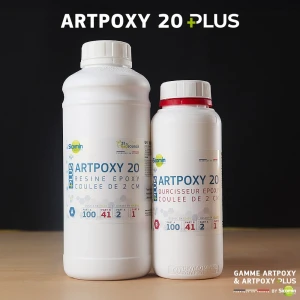
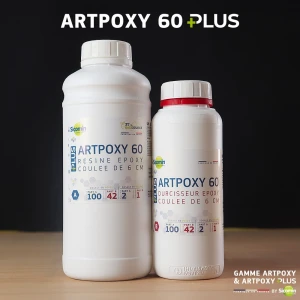
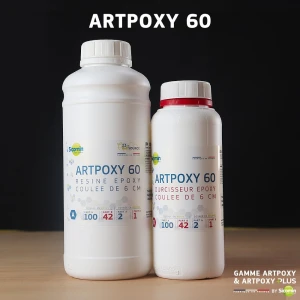
Today, Sicomin is one of the leading companies in the development of high-performance bio-based epoxy resins, particularly through its GreenPoxy range.
What Makes These Systems Different?
High Bio-Based Carbon Content
Some formulations contain more than 50% plant-based carbon.
Equivalent Technical Performances
These resins are designed to directly replace conventional systems without compromising performance.
Compatibility with Composite Manufacturing Processes
Infusion, laminating, casting, and molding processes are fully compatible with bio-based systems.
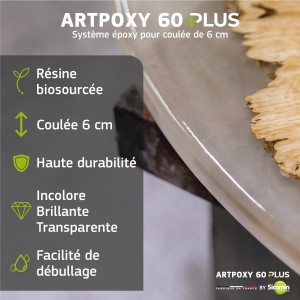
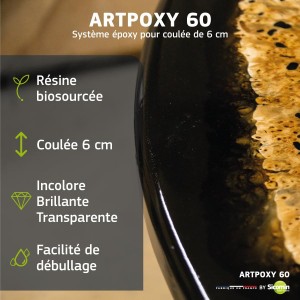
Transparency and Aesthetics
Ideal for wood/epoxy applications and visible composite parts.
Proven Performance in the Field
Sicomin’s bio-based resins are already used in:
- Boatbuilding and marine applications
- Surfboards and kitesurf boards
- Structural carbon fiber components
These are no longer experimental “eco-friendly alternatives,” but true industrial-grade solutions.
Why Choose a Bio-Based Resin Today?
Beyond performance, bio-based epoxy systems provide several strategic advantages:
- Reduced carbon footprint
- Compliance with environmental regulations
- Stronger eco-responsible marketing positioning
- Anticipation of future regulations and market expectations
Conclusion
Bio-based epoxy resins are no longer a compromise. Thanks to chemical innovation and the work of companies like Sicomin, they now offer:
- Equivalent mechanical performances
- Controlled thermal resistance
- Full compatibility with composite manufacturing processes
They simply represent the natural evolution of the composite materials industry: high-performance, sustainable, and responsible.